
Author: Shreekant Choukimath
==================
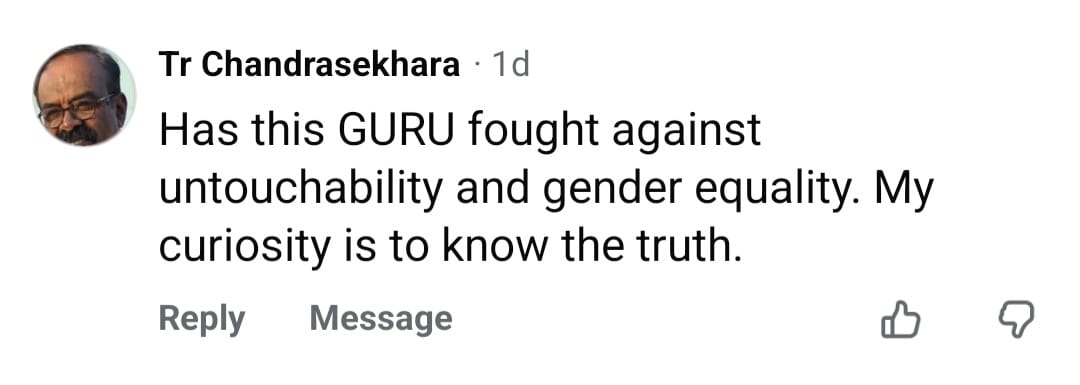
Dear Dr. T. R. Chandrasekhara Ji,
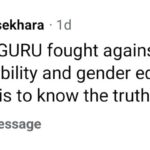
You have asked:
“Did this Guru fight against untouchability and for gender equality? My curiosity is to know the truth.”
As an academic and economist associated with the Jagatika Lingayat Mahasabha, your curiosity deserves an answer grounded in historical events—not merely in devotional praise.
The answer is an unequivocal yes.

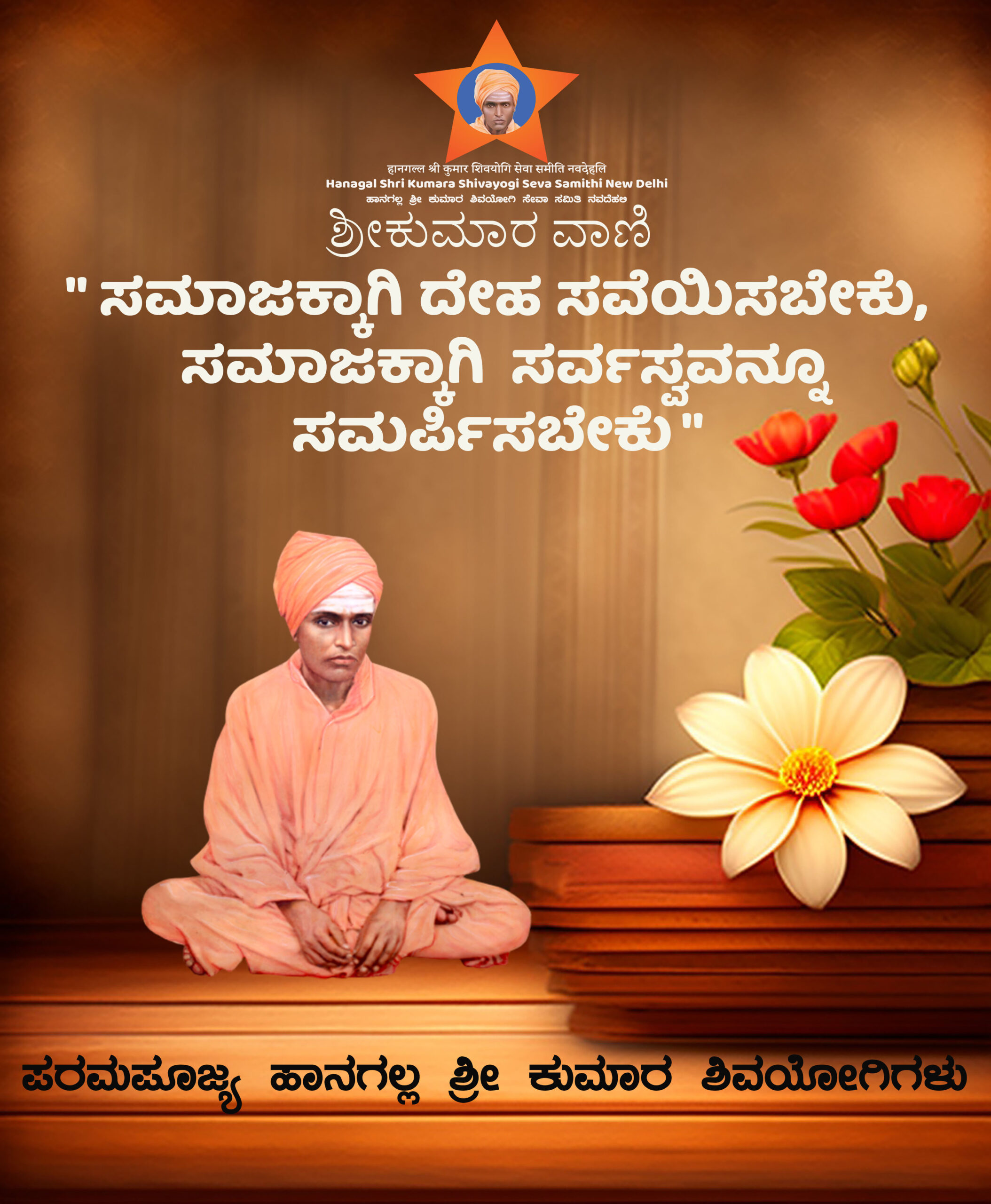
However, Hanagal Shri Kumara Shivayogi did not fight social inequality through slogans alone. He confronted it through food, healthcare, education, spiritual initiation and institution-building—at a time when challenging caste discrimination and educating women demanded extraordinary moral courage.
Service Beyond the Barriers of Caste
Hanagal Shri Kumara Shivayogi assumed responsibility for the administration of the Hanagal Virakta Math in 1896. In the very next year, 1897, the region was devastated by drought and plague.
During that humanitarian crisis, he opened the Math’s food distribution service to everyone, without discrimination based on caste or social status. Having acquired considerable knowledge of Ayurveda, he personally visited the homes of people suffering from disease and treated them without asking to which caste they belonged.
At a time when even physical proximity to certain communities was treated as “pollution,” entering their homes, treating their illnesses and feeding them was not a symbolic gesture. It was social reform in its most courageous and compassionate form.
Education and Dignity for the Visually Impaired
In 1901, Shri Kumara Shivayogi brought visually impaired students from Kadashettihalli and arranged for their education and musical training. Among those who emerged from this endeavour was the celebrated Pandit Panchakshara Gawai.
Shri Kumara Shivayogi later directed Pandit Panchakshara Gawai to establish an institution at Gadag where students from all communities could receive education and training. That institution became the renowned Veereshwara Punyashrama.
Its legacy continues even today. Internationally acclaimed Hindustani classical vocalist Padma Shri Pandit M. Venkatesh Kumar is among the distinguished disciples shaped by this tradition. His life and public recollections remain living testimony to the inclusive educational movement that grew from Shri Kumara Shivayogi’s vision.
Education for Communities Subjected to Untouchability
The late Pujya Basavalinga Swamiji of Navalgund records in Linganudi that, around 1909, children belonging to communities then subjected to untouchability were denied admission to an existing school near Badami.
Shri Kumara Shivayogi did not remain a silent spectator. He arranged a separate school at Mangaluru village in the Badami region so that those children would not be deprived of education.
Today, one may debate the form that intervention took within the limitations of that historical period. But its purpose is unmistakable: children rejected by the prevailing social order had to be educated.
Spiritual Equality Put into Practice
For Shri Kumara Shivayogi, spiritual dignity was not the privilege of birth.
He bestowed Ishtalinga and later Lingadeeksha upon his childhood friend Talawar Choudappa Nayaka of Joisaraharalahalli, who thereafter became known as Choudayya and devoted his life to service at Shivayogamandira. The episode is recorded with reference to family testimony and Parapate: Paramparege Hosa Munnudi. Read the documented account.
He also conducted mass Lingadeeksha for Madivala devotees at Hanagal and Hirekerur, as recorded by Shri Shivalinga Shastri in Parapate: Paramparege Hosa Munnudi. Another mass Lingadeeksha is recorded at Halagali in Bilagi Taluk in 1909.
Kumaresha Charite—Gurukanda records another profound incident: Shri Kumara Shivayogi accepted milk from Kanalli Bharamappa, who belonged to a community then treated as untouchable, and used it for his Linga Puja.
One must understand the revolutionary meaning of that act in its historical context. By accepting the milk for sacred worship, he challenged the very notion that a human being—or anything offered by that person—could be considered impure because of caste.
Shivayogamandira’s Influence Beyond India
In 1929, at the age of five, Shri Mahesh Ghatradyal entered Shivayogamandira and received training in yoga, meditation, scriptures and discipline. He later carried that spiritual and cultural training to France and earned distinguished national recognition there, including the Legion of Honour.
His journey from Shivayogamandira to France demonstrates that the institution founded by Shri Kumara Shivayogi was not designed to create a closed hereditary circle. It trained individuals capable of serving humanity across geographical, social and cultural boundaries. Read the documented account.
His Contribution to Women’s Education and Equality
Shri Kumara Shivayogi’s commitment to women’s empowerment was equally practical and far ahead of its time.
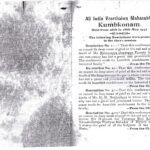
At the Third Session of the Akhil Bharat Veerashaiva Mahasabha, held at Solapur in December 1907, he ensured the adoption of a specific resolution supporting women’s education.
He did not allow that resolution to remain confined to conference proceedings.
In 1908, he established the Akkamahadevi Girls’ School at Hirekerur. The school began with only seven girls because prevailing social attitudes strongly opposed female education. Shri Kumara Shivayogi went from locality to locality, addressed families and persuaded parents to educate their daughters.
Within two years, the number of students reportedly increased from seven to seventy.
This was not merely the opening of a school. It was a direct challenge to the belief that a woman’s life should remain confined to domestic labour and social submission. The school gave girls literacy, self-respect and the confidence to participate in public and spiritual life. Some of its students later emerged as public religious speakers—an exceptional development for that period. Read the history of the Akkamahadevi Girls’ School.
Shri Kumara Shivayogi also gave women a meaningful platform at the 1909 Veerashaiva Mahasabha Session held in Ballari. That institutional opening helped create a tradition in which women scholars and leaders could participate in religious and public discourse. In later decades, distinguished women such as Jayadevitayi Ligade emerged through this broader reformist environment.
It is also worth remembering that Jagadguru Mate Mahadevi later served for several years as a Vice-President of the Akhil Bharat Veerashaiva Mahasabha. This historical fact demonstrates that women’s leadership was not alien to the Mahasabha’s institutional tradition.
Let History Be Judged by Action
Dr. Chandrasekhara Ji, the life of a reformer must not be judged solely by whether he used the vocabulary preferred by later generations. It must be judged in the context of his time and by the barriers he actually broke.
Hanagal Shri Kumara Shivayogi:
- Fed people without caste discrimination during drought and plague.
- Entered the homes of the afflicted and treated them without considering caste.
- Educated visually impaired children and encouraged inclusive musical institutions.
- Arranged education for children denied schooling because of untouchability.
- Conferred Ishtalinga and Lingadeeksha across caste boundaries.
- Accepted an offering from a person treated as “untouchable” and used it in sacred worship.
- Secured a resolution supporting women’s education in 1907.
- Founded the Akkamahadevi Girls’ School in 1908.
- Created institutional space for women’s education, scholarship and leadership.
These are not merely ceremonial claims made during a Jayanti celebration. They are episodes recorded in biographies, institutional histories, oral testimonies and community records.
A Guru who fed the hungry without asking their caste, treated the diseased without fearing “pollution,” placed the Ishtalinga on socially excluded devotees and put books into the hands of girls was not merely speaking about equality.
He was practising it.
Your curiosity is welcome, because honest questions lead us towards truth. But historical truth must be pursued with the same seriousness whether the evidence supports our assumptions or challenges them.
We respectfully invite you to study these records, examine the cited works and, if necessary, interview the surviving disciples and institutional representatives.
Let us examine history through evidence—not through ideological convenience.
With respectful regards,
Shreekant Choukimath






 Total views : 28271